
The best grapefruit substitutes are those similar to grapefruits nutritionally — i.e., low-calorie foods rich in Vitamin C. Citrus fruits such as oranges and tangerines are good options. Other alternatives include papaya and kiwis.
Keep reading for fresh ideas (no pun intended) on what to use instead of grapefruit in a recipe or if you’re following, say, the military or 3-day diet.
1. Oranges


Oranges are similar to grapefruits, which makes sense since grapefruits are an orange-pomelo hybrid. The texture and taste of oranges are similar to that of a grapefruit, though oranges are sweeter. If you don’t like the sour taste of grapefruit, oranges may suit your taste better.
Since oranges and grapefruit are of the same size, you can substitute them for the same quantity. For example, if you’re looking for something other than grapefruit juice to use in a cocktail, orange juice is the way to go. I love using orange juice in Brown Derby cocktails because the juice tones down the spicy whiskey minus the sour punch of grapefruit juice.
Nutritionally, oranges and grapefruits are similar. They contain almost identical amounts of Vitamin C, calories, protein, carbohydrates, and fat. One thing that makes oranges healthier than grapefruit is that they have 50% more fiber than the latter.
Note that not all oranges are created equal. Some oranges are sweeter than others, and some may contain more seeds than you’re willing to remove. Be sure to choose your orange substitutes carefully.
If you’re following the military diet, you shouldn’t replace grapefruit with oranges because the latter has higher sugar content, and the rules of this particular diet are strict. As you know, military diets force you to lose at least 10 pounds within a week, meaning you have to watch every calorie you consume.
2. Mangos


Like oranges, mangos are a great substitute for grapefruits in salads and cocktails. However, you may want to add a bit of lime juice to balance out the taste of mangos since they’re far sweeter than grapefruits. They’re also similar in size, so you can swap the same amount of mango or mango juice without changing the recipe’s integrity.
Also, mangos have more calories than grapefruits, though the difference isn’t significant. A 100-gram grapefruit has 42 calories, whereas a 100-gram mango has around 60. Still, if you’re following a strict diet, this caloric difference may be important to you.
Nutritionally, mangos and grapefruits have similar amounts of vitamin C, protein, carbs, and fat. However, grapefruits contain more of the following nutrients:
- Vitamin A
- Magnesium
- Potassium
- Thiamin
- Riboflavin
Of course, if you have a sweet tooth, you may not bother with grapefruit at all and will want to go with mangos all the way. Also, mangos are tropical fruits, meaning you won’t find too many of them in the United States, and they can add a touch of the exotic to any food you add them to.
3. Peaches


If you want to use something other than a grapefruit in a salad recipe, a peach may be your best bet. Peaches add a fresh taste to salads, which you may find preferable to the sourness of grapefruits. You can make this swap knowing you didn’t add any calories to your food, as the two fruits are calorically identical. They also have similar amounts of fiber.
Another benefit to substituting peaches for grapefruits is that peaches have less sugar, saturated fat, and carbohydrates than grapefruits. Peaches are still pretty sweet though, especially if you use them as filling for pastries and the like.
One drawback for peaches is that they have significantly lower amounts of vitamin C and A. Grapefruits have 661% more Vitamin C and 142% more Vitamin A than peaches — a significant difference when nutritional value is your priority.
4. Pomelos

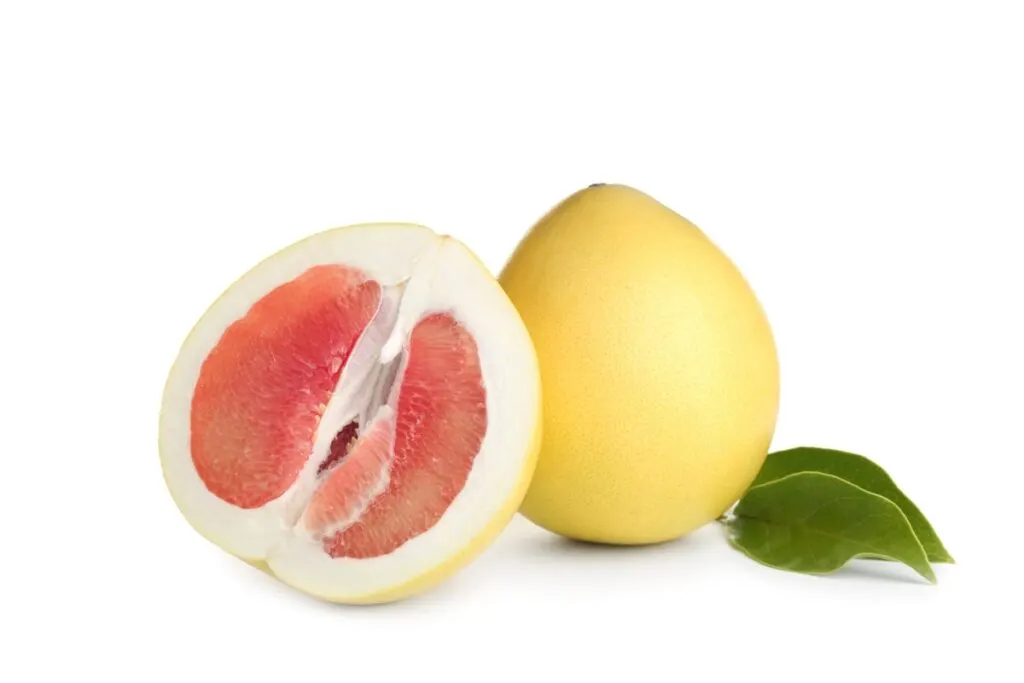
Pomelos are similar in taste to grapefruits, although they’re slightly sweeter. If you’re looking for an almost identical swap for grapefruit, a pomelo is the way to go. Pomelos are Southeast Asian citrus fruits that are also identical nutritionally to grapefruits.
However, you should note that, like grapefruits, pomelos can interfere with medications. Both of these fruits block an enzyme that breaks down the medicine, meaning certain medications will stay too long in your body and may cause you more harm than good.
Another drawback to swapping a pomelo for grapefruit is that pomelos can be hard to find in American supermarkets. But if by chance you happen to get some, feel free to swap the same amount of the fruit or juice for any grapefruit recipe.
If you’ve never eaten a pomelo before, here are some ideas for how to use them:
- Add pomelo slices to your salad. The fruit pairs especially well with chicken.
- Add some salt and chili powder to the fruit for a spicy kick.
- Add chunks of pomelo to any fruit salad.
- Use the juice in cocktails, such as a Paloma.
- Use it as a marinade for meat or fish.
5. Tangerines


Similar to oranges, tangerines are the same as grapefruits in terms of size, texture, and nutritional value. Both fruits are also great sources of vitamin C and vitamin A, though grapefruits have 71% more vitamin A than tangerines. On the other hand, tangerines have a higher fiber content.
Tangerines are also sweeter than grapefruits, so if you have a sweet tooth, the big T may be the one for you.
6. Lemons


If you’re making a cocktail and want the bitter, sour taste of grapefruit minus the actual fruit, lemon juice with a little bit of plain syrup can be a great alternative. As long as you sweeten up the lemon mixture a bit, it’ll taste the same as grapefruit more or less.
Nutritionally, lemons have more Vitamin C, fiber, calcium, and potassium, but not nearly as much Vitamin A as grapefruits.
That said, this swap doesn’t make sense for every situation. For example, you probably wouldn’t want to put slices of lemon in your salad or eat a lemon as you would a grapefruit. Lemons are far more acidic than grapefruits, and you may be in for an unpleasant surprise if you try to use lemons the way you would grapefruits.
7. Limes


Like lemons, limes are a great alternative to grapefruit in cocktails because they have a similar bitter flavor and nutritional content. Also like lemons, you’ll want to sweeten up your lime a bit for it to be an ample substitute for grapefruit. For the above reasons, you don’t want to substitute limes for grapefruit as is.
Limes and grapefruits have similar levels of vitamin C, calories, protein, carbs, and fat. However, limes have less sugar and more fiber, making them a bit healthier than grapefruit.
8. Pineapples


Pineapples have a similar flavor profile to grapefruits as they’re both sweet and tart fruits.
The textures of the two fruits are different, however, so you wouldn’t necessarily want to swap out grapefruit for pineapples in every recipe.
Nutritionally, both fruits have similar amounts of vitamin C, fiber, protein, sugar, and calories. If you choose to use pineapple instead of grapefruit in a recipe, rest assured that you’re getting a similar nutritional value.
9. Blackberries
